


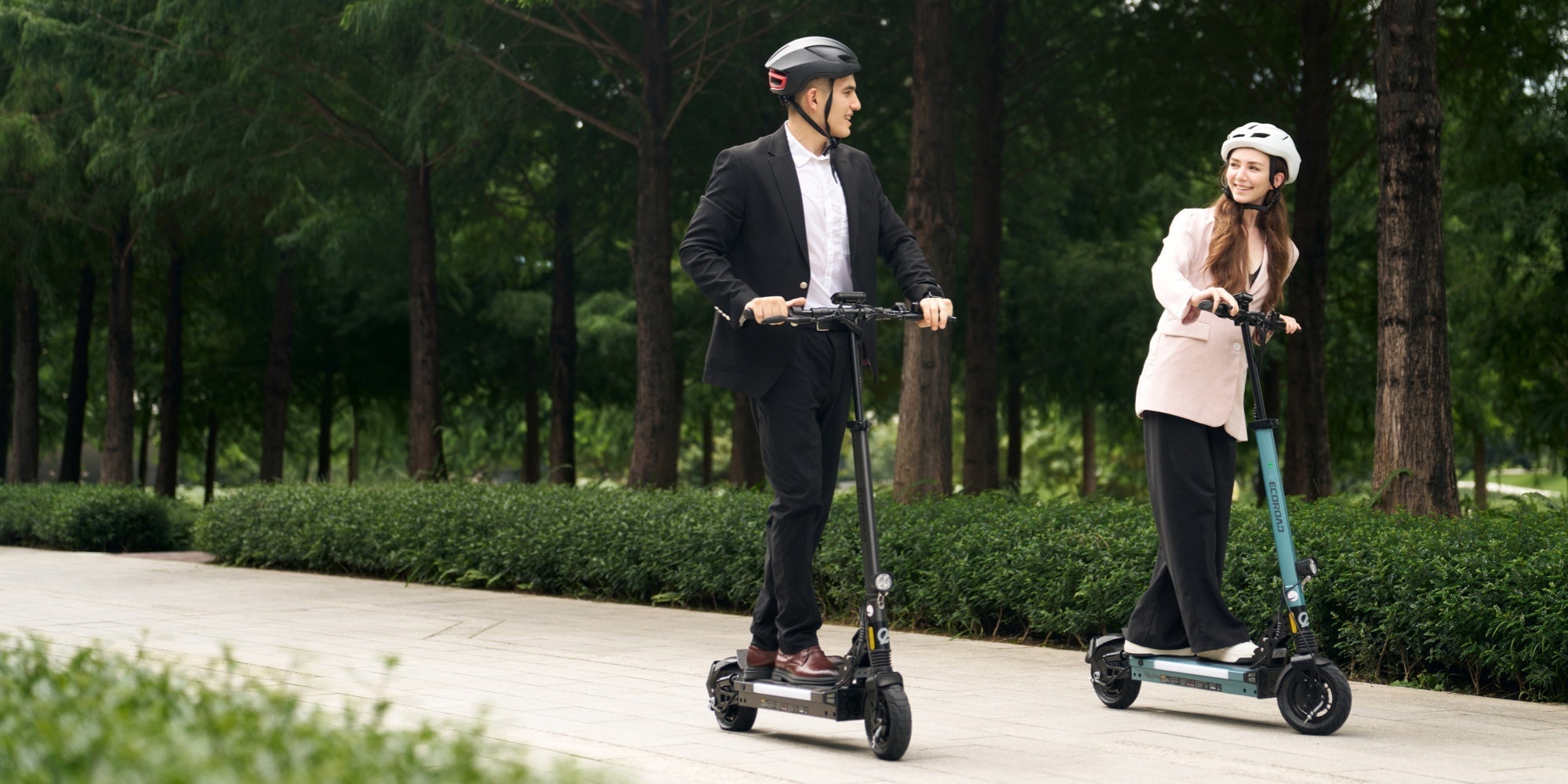
Never get caught unprepared on your ride. The complete ECOROAD e-scooter commute checklist for safety, comfort, and daily reliability.
Preparation Is What Separates a Good Commute from a Frustrating One

An ECOROAD scooter handles the riding. You handle the preparation. The two things that most commonly derail a daily commute are usually dead batteries and forgotten safety gear, not hardware failures. Neither is complicated to fix. They just require a consistent routine.
This checklist is organized by priority, safety being the first, then practical daily essentials, then the extras worth adding based on your specific route and distance.
1. Safety Gear: Non-Negotiable Regardless of Commute Length
ECOROAD scooters range from 21 mph on the EC9 to 32 mph on the ET8. At those speeds, a fall without gear has real consequences. This section isn't optional.
Helmet. The most important item on this list. It should fit snugly without rocking, meet a recognized safety standard (CPSC or ASTM), and have adequate ventilation for warm commutes. A helmet that fits matters as much as wearing one at all.
Reflective gear and lights. Your scooter's built-in lights cover front and rear visibility. A reflective vest or jacket adds coverage from side angles and is especially useful at intersections. The ET6 and ET8 include integrated turn signals and bright LED lighting, but reflective clothing is a simple, cheap layer on top of that.
Gloves. They improve handlebar grip, protect your palms and wrists in falls, and reduce vibration fatigue on longer commutes. Look for gloves with palm padding and knuckle coverage rather than thin fabric.
Proper footwear. Closed-toe shoes with grip soles. Sandals and smooth-soled shoes are genuine hazards because they reduce deck stability and slip easily, especially in wet conditions.
2. Know Your Battery Before You Leave
Running out of charge mid-commute is the most avoidable problem on this list. Here's where ECOROAD's lineup stands on range:
|
Model |
Range |
Price |
|
35 miles |
$409.99 |
|
|
35 miles |
$399.99 |
|
|
31 miles |
$529.99 |
|
|
42 miles |
$449.99 |
|
|
47 to 50 miles |
$699.99 |
The rated range is under optimal conditions. Real-world range is typically 20-25% lower, depending on rider weight, terrain, temperature, and speed mode. Calculate your round-trip distance, add a buffer, and charge accordingly.
What to bring based on your commute length:
-
Short (under 8 miles): Any model handles it comfortably. A charger stays home.
-
Medium (8-20 miles): Charge nightly. The ET6's 42-mile range gives the most buffer in this category.
-
Long (20+ miles): Bring your charger if a top-up opportunity exists at your destination. The ET8 at 47 to 50 miles is the only model that reliably covers this range in a single charge without concern.
Charging costs pennies per session. By reading ECOROAD's piece on riding electric scooters as a green commuting solution, you can break down exactly how much you save compared to fuel costs.
3. Security: Don't Leave Your Scooter Unprotected
ECOROAD’s EC10, ES4, ES6, ET6, and ET8 all support remote lock via the ECOROAD app. That's a solid first layer. For any situation where you're leaving the scooter unattended, a physical lock adds necessary backup:
U-lock - the strongest option for fixed racks or posts
Chain lock - more flexible for awkward anchor points
Cable lock - lightweight for quick stops, best paired with a U-lock rather than used alone
Lock the frame and wheel to a fixed structure, not just the handlebars. Even a few unsecured minutes is enough opportunity.
4. Everyday Ride Essentials

These are the practical items that make daily commuting smooth rather than stressful.
Backpack. The only hands-free carrying option that doesn't affect balance. A shoulder bag or handlebar-hung tote shifts your center of gravity and interferes with steering. A well-fitted backpack keeps weight centered and your hands fully on the bars. Carry your wallet, keys, charger, and work essentials here.
Phone mount. Stopping repeatedly to check directions is both inconvenient and a balance hazard. A handlebar-mounted phone holder keeps navigation visible and hands on the handlebars. Particularly useful for new routes or multi-stop commutes.
Small multi-tool. A hex wrench set covers 90% of on-the-road adjustments on the handlebar clamp, folding mechanism, and loose deck screws. Daily commuting gradually vibrates bolts loose, and a two-minute tighten is far better than discovering the issue mid-ride.
Portable tire pump (for pneumatic tire models). The EC10, ES4, ES6, ET6, and ET8 all use pneumatic tires. Underinflated tires reduce range, handling stability, and puncture resistance simultaneously. A small hand pump or CO2 inflator fits in any bag and handles both slow leaks and pressure top-ups. For more on why tire pressure affects so much about the ride, ECOROAD's guide on why 8.5-inch off-road tires excel in city riding covers the connection between tire condition and performance.
5. Weather Preparation
Conditions change between your morning and evening commute more often than forecasts suggest. A few small additions handle most of what urban weather throws at you.
Rain jacket - lightweight and packable, stays in the backpack until needed. Wet roads require slower speeds and earlier braking regardless of your scooter's IPX4 water resistance rating.
Glove liners or warmer gloves - for cooler mornings, cold hands reduce grip sensitivity and reaction speed.
Sunglasses or UV protection - relevant for long summer commutes where glare affects visibility and eye fatigue sets in.
None of these takes up meaningful space in a backpack. The one you'll regret not having is the rain jacket.
6. Pre-Ride Check: 90 Seconds That Prevent Most Problems
Before leaving, run through this quickly:
Battery level - enough charge for the round trip plus buffer?
Tire pressure - firm to the touch (pneumatic models)?
Brakes - squeeze both levers, confirm they engage firmly and consistently.
Lights - front and rear working, especially for early morning or evening rides
Folding mechanism - fully locked and not wobbly
That's it. It takes less time than waiting for a traffic light and catches the issues that turn a smooth commute into an inconvenient one.
Your Checklist by Commute Length
|
Short (under 8 miles round-trip): |
Medium (8-20 miles): |
Long (20+ miles): |
|
Helmet, gloves, reflective gear |
Everything above |
Full checklist |
|
Phone and lock |
Charger |
Extra layer for temperature changes |
|
Multi-tool |
Tire pump |
Backup power plan at destination |
|
|
Rain jacket |
|
The Commute That Runs Itself
The first few times you run through this checklist it feels deliberate, but after a week, it becomes automatic. The difference is that a well-prepped commute on an ECOROAD scooter is genuinely one of the most efficient ways to get around a city: faster than walking, cheaper than transit, zero fuel costs, and no parking. The gear and the preparation are what make that reliability repeatable every single day.
Browse the full ECOROAD’s collection to find the model that matches your commute distance and terrain.
What Riders Usually Ask
Do I really need to bring a charger every day?
Only if your round-trip distance is close to your model's real-world range. For most EC9 and EC10 riders on short urban commutes, a nightly home charge is enough. ET6 and ET8 riders with 42-50 miles of range rarely need a mid-day top-up unless commuting very long distances.
What's the best way to carry everything without overloading?
A 20-25 liter backpack handles the full checklist that carries your charger, tools, rain jacket, and daily work essentials, without feeling heavy. Keep the backpack weight centered and low for the best effect on balance.
Is the app lock enough, or do I need a physical lock too?
The app lock is a strong theft deterrent and triggers an alarm, but a physical U-lock through the frame is the more secure option for extended parking. Use the app lock for quick stops, physical lock for anywhere you're leaving the scooter for more than a few minutes.
How do I handle rain if I get caught in it unexpectedly?
Slow down, increase following distance, and avoid painted road markings, metal grates, and wet leaves. ECOROAD's IPX4-rated models handle light rain without issue. A rain jacket in your bag covers the rider side of the equation.
What's the minimum kit for a very short, low-speed commute?
Helmet, lock, phone, and footwear with grip. Everything else scales up from there depending on distance, weather, and terrain. The helmet is the one item with no acceptable substitute, regardless of how short the ride is.