


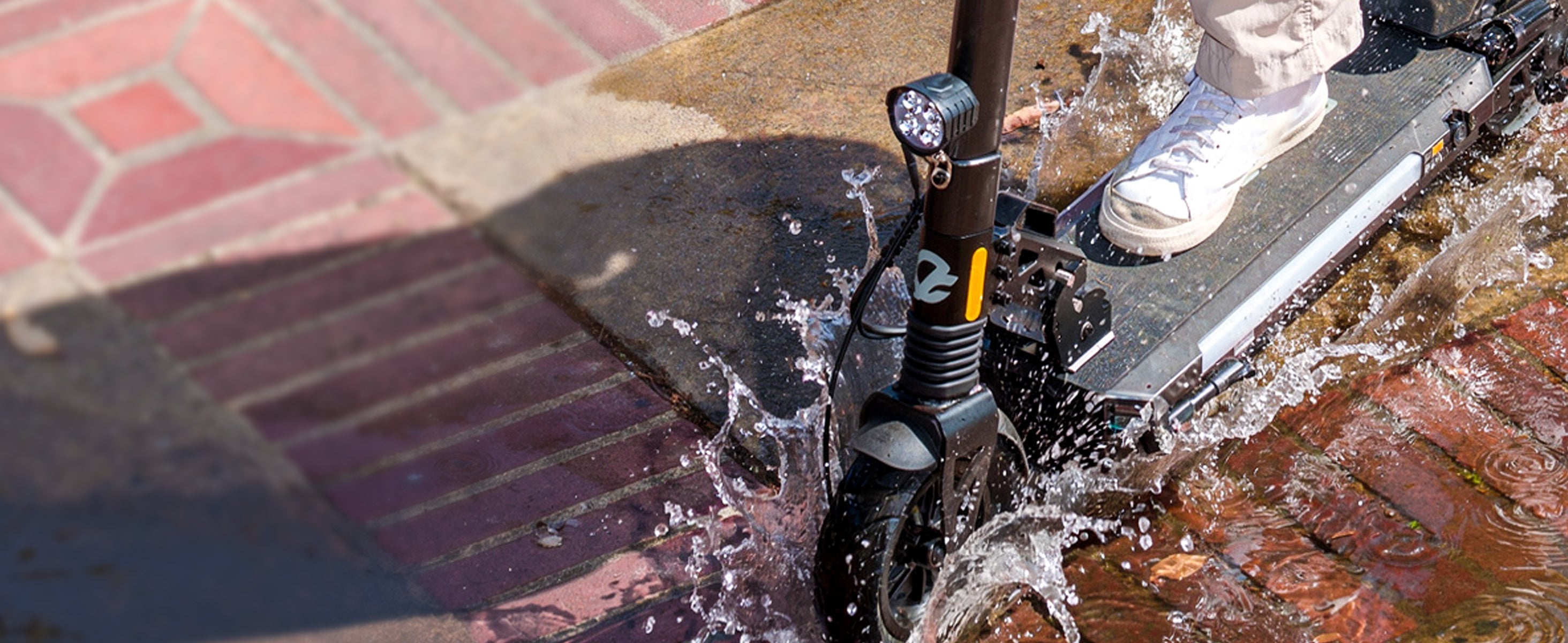
Learn what makes an all terrain electric scooter different, with tips on tires, brakes, range, suspension, power, and safer city-to-trail riding.
Start With the Roads You Actually Ride
An all terrain electric scooter is different from a standard commuter scooter because it is designed to handle rougher surfaces, longer rides, hills, and mixed riding conditions with more stability and control. Instead of focusing only on light weight or basic portability, all-terrain scooters usually place more attention on tires, braking, motor power, battery range, suspension, and rider comfort.
That difference matters if your ride is not perfectly smooth. A scooter used around downtown Denver, hilly streets in San Francisco, cracked bike lanes in Chicago, gravel park paths in Austin, or coastal routes near Los Angeles needs more grip and control than a simple short-distance scooter.
ECOROAD’s electric scooter collection separates classic commuting models from stronger all-terrain options, which makes it easier to compare what kind of scooter fits your route.
All-Terrain Scooters Have Better Tires for Rough Surfaces

Tires are one of the biggest differences between a basic commuter scooter and an all-terrain model. Standard commuter scooters are often built for smooth pavement. All-terrain scooters usually use larger, wider, or more rugged tires that can handle bumps, cracks, gravel, and uneven paths with more confidence.
This does not mean you should ride aggressively over every rough surface. It means the scooter is better prepared when the road changes. A larger or more capable tire can help reduce vibration and improve stability when pavement turns patchy.
ECOROAD’s article on why light off-road tire scooters excel in city riding is useful because it explains how tire design affects everyday comfort, not just off-road riding.
For riders who mainly use bike lanes but still deal with rough pavement, potholes, driveway lips, and occasional gravel, tire choice can make the scooter feel much less nervous.
Power Matters More on Hills and Mixed Terrain
A basic scooter may feel fine on flat pavement. Once you add hills, rider weight, headwind, or rough surfaces, motor power starts to matter more.
The ECOROAD EC10 Electric Scooter lists a 750W motor, 25 mph top speed, and 35-mile range, making it a practical step up from lighter commuter models. For riders who want more power and longer range, the ECOROAD ES6 Electric Scooter lists a 1000W motor, 31 mph top speed, and 40+ mile range.
More power is not only about speed. It helps the scooter maintain momentum on hills and rougher routes. That said, beginners should still ride in a controlled mode and avoid treating power as permission to ride faster than conditions allow.
Range Is Usually Stronger on All-Terrain Models
All-terrain scooters often have larger batteries because rough surfaces, hills, and higher power use more energy. If your scooter is working harder, it will usually drain faster than it would on flat, smooth pavement.
For this reason, it is smart to choose more range than your exact route requires. If your round trip is 12 miles, a scooter listed around 35 to 40+ miles gives you a better buffer for errands, detours, wind, hills, and battery aging.
The ECOROAD ET8 Electric Scooter is one of the stronger range-focused models in the lineup, listing a 1000W motor, 32 mph top speed, and 56-mile range. That kind of range can make sense for riders who want longer weekend routes, park paths, or mixed city-to-trail use.
Brakes Become More Important as Terrain Gets Rougher
All-terrain scooters need reliable braking because rough surfaces increase stopping distance. Gravel, wet pavement, sand, leaves, and downhill sections all reduce traction.
ECOROAD’s guide on why brakes are the most important feature on an electric scooter is especially relevant for all-terrain riders. A scooter with more power and range is only useful if the rider can slow down smoothly and predictably.
When riding mixed terrain, brake earlier than you would on smooth pavement. Try to slow before turns instead of braking hard while turning. On loose ground, sudden braking can cause sliding, even with good tires.
Suspension and Ride Comfort Make Longer Rides Easier

All-terrain riding is not just about getting over rough surfaces. It is also about reducing fatigue. If every crack and bump travels straight into your hands, knees, and back, the ride becomes tiring fast.
Suspension, tire size, deck stability, and riding posture all affect comfort. A scooter that feels steady on broken pavement can be easier to use for commuting, errands, and weekend exploring.
This is where all-terrain models stand apart from simple short-trip scooters. They are usually better for riders who want one scooter for weekday transportation and occasional rougher routes. If you ride near parks, waterfront paths, college campuses, or older city roads, comfort should be a major buying factor.
All-Terrain Does Not Mean “Ride Anywhere”
The phrase “all-terrain” can be misleading if riders take it too literally. An all-terrain scooter is more capable, but it is not meant for reckless riding through deep mud, deep water, large rocks, or unsafe trails.
Think of all-terrain as “better prepared for mixed surfaces.” It helps with rough pavement, hard-packed dirt, gravel paths, and uneven roads. It does not replace good judgment.
Before riding in a new area, check whether scooters are allowed. Local rules may differ for bike lanes, sidewalks, park paths, and trail systems. ECOROAD’s guide to riding e-scooters legally in New York City is a good example of why riders should understand local rules before building a route.
Who Should Choose an All-Terrain Scooter?
An all-terrain scooter makes sense if your route includes more than clean, flat pavement. It can be a better fit for riders who deal with rough streets, hills, longer commutes, light gravel, or mixed city riding.
A standard commuter scooter may be enough for short, smooth trips. But if your commute includes potholes, rough shoulders, bridge paths, or park roads, an all-terrain scooter can feel more stable and comfortable.
The ECOROAD ES4 Electric Scooter is another useful comparison point, listing an 800W motor, 25 mph top speed, 35-mile range, and 330 lb max load. Riders who want more capability than a basic commuter scooter but do not need the highest range may find this category practical.
Ride With the Scooter, Not Against It
Even the best scooter needs the right riding habits. On rougher surfaces, keep your knees slightly bent, hold the handlebars firmly without locking your arms, and look ahead instead of staring at the front wheel.
Use smooth throttle and smooth braking. If the scooter moves slightly under you on gravel or uneven pavement, stay calm and guide it gently. Overcorrecting can make the ride feel worse.
If conditions are wet, sandy, or covered with leaves, slow down. Better tires and stronger brakes help, but they do not erase basic traction limits.
Choosing the Right All-Terrain Scooter
The right all terrain electric scooter should match your actual riding conditions. If you mainly ride city streets with occasional rough pavement, a model like the EC10 or ES4 may be enough. If you need more power and range for hills or longer routes, the ES6 or ET8 may be better fits.
The best choice is not always the fastest scooter. It is the one that gives you enough range, confident braking, stable tires, and a comfortable ride for the places you actually go.
What Riders Usually Ask
What is an all-terrain electric scooter?
An all-terrain electric scooter is built for mixed surfaces such as rough pavement, light gravel, dirt paths, hills, and uneven roads. It usually has stronger tires, more power, better range, and improved braking.
Is an all-terrain scooter good for commuting?
Yes, especially if your commute includes rough streets, hills, potholes, or mixed surfaces. For smooth short trips, a lighter commuter scooter may be enough.
Can all-terrain scooters ride on gravel?
Many can handle light gravel better than basic commuter scooters, but riders should slow down, brake gently, and avoid sharp turns on loose surfaces.
Do all-terrain scooters need more maintenance?
Often, yes. Rougher riding can wear tires, brakes, bolts, and suspension parts faster, so regular checks are important.
Should beginners buy an all-terrain scooter?
Beginners can choose an all-terrain scooter if they want stability and comfort, but they should start slowly and learn braking, turning, and throttle control before riding rougher routes.