


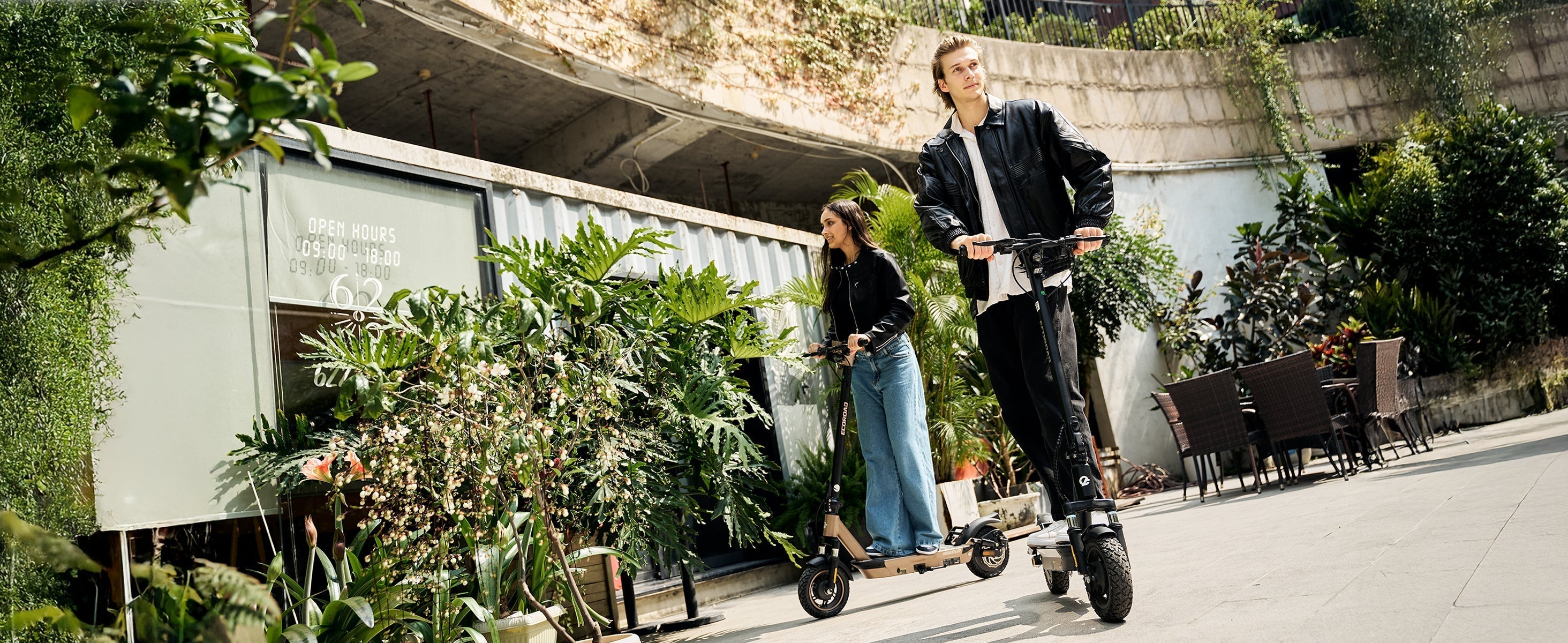
Learn how long electric scooter batteries last, plus charging and range tips to protect battery life, avoid range anxiety, and ride smarter.
Know What Your Battery Is Really Doing
Electric scooter batteries usually last several years with proper care, but the exact lifespan depends on charging habits, storage conditions, riding style, temperature, battery size, and how often the scooter is used. For daily riders, the real question is not only how long the battery lasts overall, but how to keep range dependable from one ride to the next.
A scooter used for short errands in San Diego will not drain the same way as one climbing hills in San Francisco or handling stop-and-go traffic in New York City. Range also changes with rider weight, speed, tire condition, wind, hills, and weather. That is why the best battery care starts with realistic expectations.
ECOROAD’s electric scooter collection includes models with listed ranges from shorter commuter distances to longer all-terrain rides, so understanding battery range helps you choose and maintain the right scooter.
Battery Lifespan vs. Riding Range

Battery lifespan and riding range are related, but they are not the same thing. Battery lifespan means how long the battery remains useful over months or years. Riding range means how far the scooter can travel on one charge.
A new battery may deliver strong range at first, then gradually lose capacity over time. That gradual change is normal. What you want to avoid is unnecessary stress that makes the battery age faster.
A scooter battery works hardest when it is repeatedly drained to empty, stored in extreme heat, charged improperly, or pushed through heavy riding with poor maintenance. Good habits do not make the battery immortal, sadly. But they can keep it feeling healthy much longer.
Why Advertised Range Can Be Different From Real Range
Advertised range is usually measured under ideal or controlled conditions. Real riding is messier. A rider going full speed into a headwind will use more battery than someone cruising at a moderate pace on flat pavement.
The ECOROAD EC10 Electric Scooter lists a 750W motor, 25 mph top speed, and 35-mile range. Riders who commute across uneven city streets or longer suburban routes should still keep a battery buffer rather than planning every ride down to the last mile.
What Affects Battery Life Most
Battery health is shaped by daily habits. Charging and storage matter, but so does how hard the scooter has to work.
A few factors make the biggest difference:
-
Frequent deep discharge: Regularly riding until the battery is empty can stress the battery.
-
Extreme temperatures: Heat and cold can reduce performance and long-term health.
-
Heavy throttle use: Fast acceleration and top-speed riding drain power faster.
-
Hills and load: Climbing hills or carrying more weight uses more energy.
-
Poor tire condition: Low pressure or worn tires can reduce efficiency.
-
Brake drag or mechanical issues: If parts rub or resist movement, range drops.
ECOROAD’s article on why brakes are the most important feature on an electric scooter is useful here because brakes affect not only safety, but also ride feel and efficiency when they are not working properly.
Charge Before the Battery Gets Too Low
You do not need to panic every time the battery drops below half, but it is smart to avoid making zero-percent rides a habit. For daily commuting, try to recharge before the battery is nearly empty.
If your commute is 8 miles round trip, a scooter with 30 or 35 miles of listed range gives you room to charge less anxiously. If your route is longer, hillier, or includes detours, a longer-range model may feel more practical.
The ECOROAD ES6 Electric Scooter lists a 1000W motor, 31 mph top speed, and 40+ mile range. That kind of range can help riders who want fewer charging worries, especially on longer routes or mixed city riding.
Use the Right Charger and Charging Spot
Always use the charger designed for your scooter. A mismatched charger can damage the battery or create safety risks. Charge in a dry, well-ventilated indoor space when possible, and avoid charging near direct heat or moisture.
After a wet ride, let the scooter dry before charging. Do not plug in a scooter with a wet charging port. It sounds obvious, but “obvious” has a funny way of disappearing when someone is tired after work and just wants to be done for the day.
If you ride to an office or campus, ask whether charging personal electric mobility devices is allowed. Some buildings have specific rules for batteries and chargers.
Store the Scooter With Battery Health in Mind

If you ride daily, storage is simple: keep the scooter dry, avoid extreme temperatures, and charge regularly. If you will not ride for a while, avoid storing the battery fully drained.
Indoor storage is best, especially during hot summer days or cold winter nights. Leaving a scooter in a car trunk, garage, or shed during extreme temperatures can affect performance.
ECOROAD’s article on foldable electric scooter design fits naturally here because portability and indoor storage are major reasons scooters work well for commuting.
How to Get More Range From Each Charge
Better range often comes from smoother riding, not secret tricks. Ride at a moderate speed, accelerate gently, keep tires in good condition, and avoid carrying unnecessary weight.
If your scooter has riding modes, use a lower or eco mode when range matters more than speed. Plan routes that avoid steep hills when possible. A slightly longer but flatter route may use less battery than a short route with repeated climbs.
Tires matter too. ECOROAD’s article on light off-road tire scooters in city riding explains how tire design affects comfort and control. Poor tire condition can also make the scooter work harder than it needs to.
Choose Battery Size Around Your Real Route
If range is your top concern, start with your daily route. A student riding across campus may be comfortable with a shorter range. A commuter riding across Los Angeles neighborhoods, Denver hills, or longer suburban roads may want more.
The ECOROAD ET8 Electric Scooter lists a 1000W motor, 32 mph top speed, and 56-mile range. That does not mean every rider needs the longest-range model, but it can make sense for riders who want bigger battery capacity for longer trips, hills, or less frequent charging.
ECOROAD’s article on electric scooter vs. car commute savings is also useful for riders thinking about using a scooter for more daily trips instead of short car rides.
Make Range Planning Part of the Ride
Battery life becomes less stressful when range planning becomes routine. Know your normal round trip. Watch how much battery your route usually uses. Leave a reserve instead of arriving home near empty.
If you notice sudden range loss, check the simple things first: tire condition, brakes, riding mode, charger connection, temperature, and route changes. If the battery drops unusually fast even after those checks, contact support or a qualified repair service.
Keep Your Battery Working Longer
Electric scooter batteries last longest when riders treat charging and range as part of regular maintenance. Use the correct charger, avoid extreme temperatures, keep the battery from sitting empty, ride smoothly, and choose a scooter with enough range for your real routes.
A healthy battery makes the whole scooter feel more reliable. It gives you the freedom to commute, run errands, or take longer weekend rides without constantly watching the display like it is a suspense movie.
What Scooter Riders Usually Ask
How long do electric scooter batteries last?
Most electric scooter batteries can last several years with proper charging, storage, and riding habits. Lifespan varies based on use, temperature, battery quality, and maintenance.
Why does my scooter range seem lower than advertised?
Advertised range is usually based on ideal conditions. Hills, speed, rider weight, cold weather, wind, tire condition, and stop-and-go riding can reduce real-world range.
Should I charge my electric scooter after every ride?
If you ride often, charging after regular use is fine. Try not to let the battery sit fully drained for long periods.
Is it bad to ride until the battery is empty?
Doing it occasionally is not the end of the world, but making a habit of fully draining the battery can add stress over time.
How can I make my scooter battery last longer?
Use the correct charger, avoid extreme temperatures, ride smoothly, keep tires maintained, avoid frequent full drain, and store the scooter in a dry indoor space when possible.