


The Short Answer: Not at High Speed on Public Streets
No, you can’t ride a high-speed electric scooter at high speed on public streets in California or New York City. In both places, the legal limit for riding an electric scooter is 15 mph, no matter how fast the scooter can go. California also requires a driver’s license or instruction permit, and NYC doesn’t treat a stand-up scooter as legal at all if it weighs more than 100 lbs or can exceed 20 mph. This guide separates a scooter’s advertised top speed from the speed you may legally ride, and explains why certification and local regulations are two different checks.
Advertised Maximum Speed vs. Legal Riding Speed
What the spec sheet tells you
Advertised maximum speed is a capability, measured under ideal conditions: flat ground, a lighter rider, and a full battery. It tells you what a scooter can do. That matters on private property or at venues where higher speeds are allowed, but it isn’t a promise about where you can use that speed.
What the law tells you
The legally permitted riding speed is a rule for the person riding on public roads, bike lanes, and paths. It can be lower than the scooter’s capability, and it applies regardless of the posted limit on the street. A scooter that can reach 30 mph doesn’t earn the right to be ridden at 30 mph on a public street.
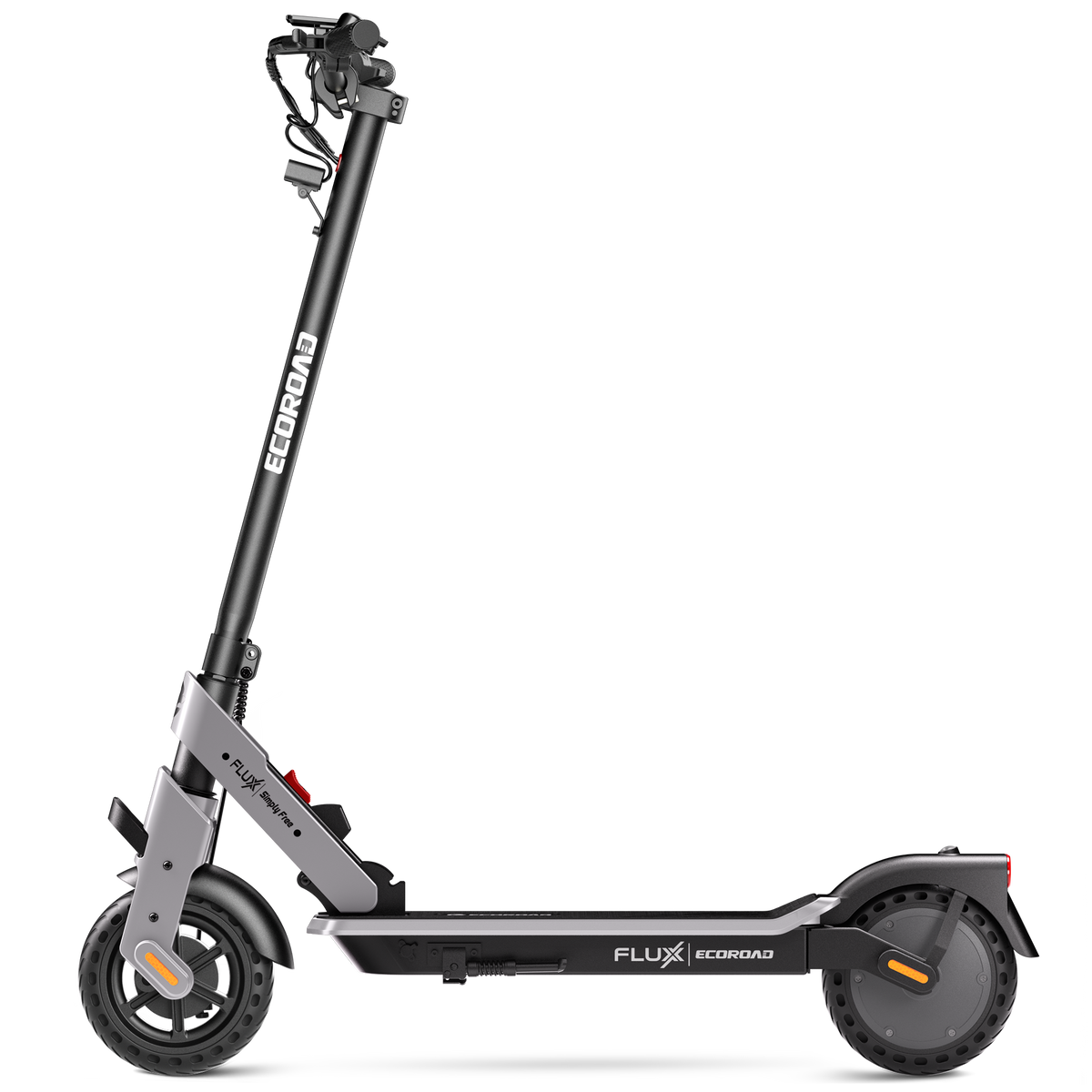
(FLUX Electric Scooter)
California: What Applies
- Speed: riders may not exceed 15 mph on public roads and bike lanes, even where the posted limit is higher.
- License: a valid driver’s license or instruction permit is required.
- Helmet: required under 18, and sensible for everyone.
- Where: bike lanes and lower-speed streets, not sidewalks.
- Other: one rider only, with lights and reflectors at night.
Cities can add their own rules, so check local requirements as well.
New York City: What Applies
- Riding limit: 15 mph on any city street.
- Device limit: a stand-up scooter must weigh under 100 lbs and be unable to exceed 20 mph on motor power alone.
- Age: at least 16.
- Where: bike lanes and streets posted at 30 mph or less, never sidewalks.
- Helmets: required for riders 16 and 17, and recommended for everyone.
Enforcement is active. On August 5, 2026, the city announced cease-and-desist orders to 42 online retailers over illegal high-speed e-bikes and scooters, with penalties of up to $2,000 per illegal sale. Illegal devices ridden on city streets may be impounded.
Buyer Concerns About Powerful Scooters
Is a powerful scooter a bad purchase? Not necessarily. Power can mean stronger hill climbing, better range, and more capable riding in places where that performance is allowed. The question is where you’ll actually ride.
Could I be cited or have my scooter impounded? Riding above the limit, riding on sidewalks, or using an ineligible device can lead to enforcement. NYC is especially strict on device category.
Can I still use a powerful scooter safely? Yes, in the right places. Use a lower speed mode where limits apply, and save higher speeds for private property with the owner’s permission or a venue that allows them. ECOROAD doesn’t represent any scooter as legal for high-speed riding on public roads in California or NYC.
What if I live in NYC? If you plan to ride on city streets, choose a scooter that fits the city’s device limits, and still ride at 15 mph or below.
Why Certification and Local Regulations Both Matter
These are two separate checks, and passing one doesn’t satisfy the other.
- Certification covers electrical safety. UL 2272 evaluates a scooter’s electrical system, including the battery, charger, and wiring, for fire and shock risks, and UL 2271 covers the battery pack. NYC’s Local Law 39 of 2023 and California’s SB 1271, in effect since January 1, 2026, require certified products for sale.
- Regulations cover how and where you ride. Speed limits, licenses, ages, helmets, and device categories come from state and city law.
A scooter can be UL certified and still fall outside NYC’s device category. And a scooter within the speed limits but without proper certification carries safety risks of its own. ECOROAD’s product pages, such as the ES6, state that its scooters have passed UL 2272 testing, with TÜV named as the lab. That speaks to electrical safety only, not to legality of speed or location. Ask for the certificate for any specific model you’re considering.
What to Check Before You Buy
- Published top speed and weight. Compare them with the rules where you live. You can review published specs on our compare models page.
- Certification. Look for UL 2272 on the scooter and UL 2271 on the battery, with the lab named and the exact model matched.
- Where you’ll ride. Public streets, private land, or both.
- Rider requirements. License or permit, age, and helmet rules.
- Shipping destination. Especially for NYC, where certain devices can’t be sold.
- Support and parts. Approved chargers, replacement parts, and a company you can reach.
Safety Basics If You Ride Fast Where It’s Legal
Wear a properly fitted helmet and sports gloves, and add pads for faster riding. Start in the lowest speed mode, check brakes and tire pressure before each ride, and remember that stopping distance grows quickly with speed. Never tamper with speed limiters. Our guide to common beginner mistakes covers habits worth building early.
Capability, Certification, and Compliance Are Three Separate Questions
A powerful scooter raises three questions that are easy to blur together. Capability is what the scooter can do. Certification is whether its electrical system has been independently tested. Compliance is whether you’re riding in line with the law where you are. In California and NYC, the answer to the compliance question on public streets is 15 mph. Know all three before you buy, and your purchase is far more likely to fit how you’ll actually ride.
What Buyers Ask About High-Speed Scooters
Can I ride a 25 mph scooter at 25 mph in California or NYC?
No, riders are limited to 15 mph on public streets in both places.
Does a higher advertised speed mean a scooter is illegal?
Not by itself in California, but in NYC a stand-up scooter capable of more than 20 mph falls outside the legal category.
Does UL certification make a fast scooter street-legal?
No, certification covers electrical safety, not speed or location rules.
Where can I use a scooter’s full speed?
Only where it’s legal and safe, such as private property with the owner’s permission.
Are certification and local rules both required?
Yes, certification is required for sale, and local rules govern how and where you ride.
This article is general information, not legal advice. Laws and enforcement change, so confirm current requirements with the California DMV, NYC DOT, and your local authority. UL certification relates to electrical safety and does not determine where or how fast a scooter may be ridden. ECOROAD does not represent any scooter as legal for high-speed riding on public roads in California or New York City.