


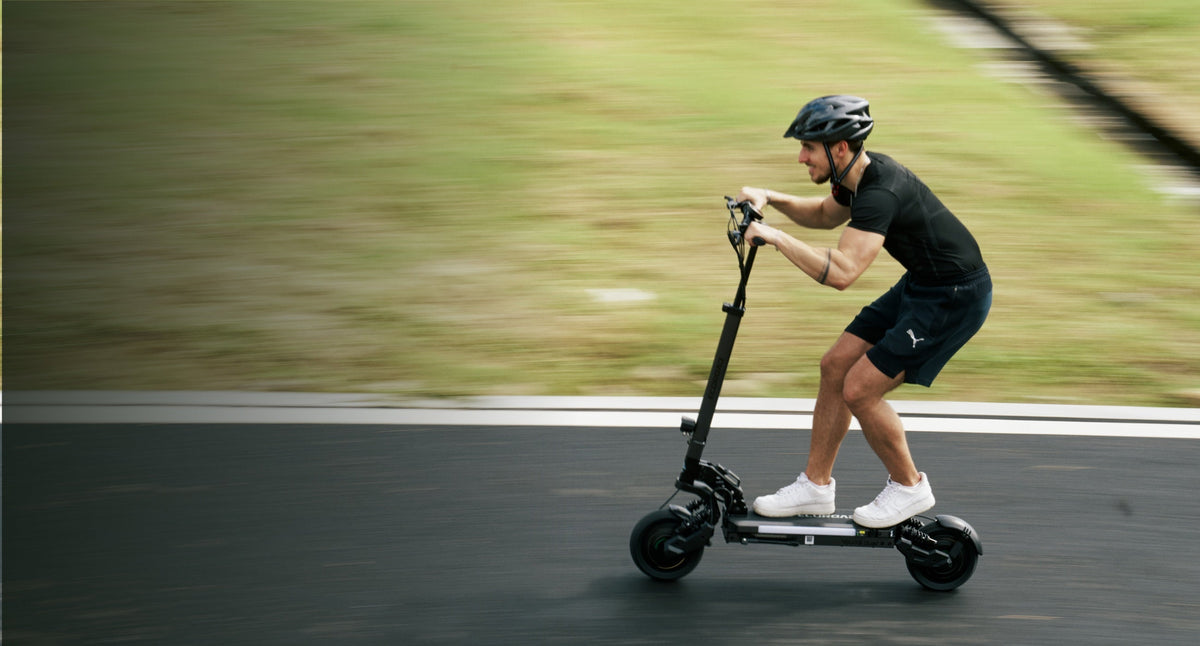
When One Motor Isn't Enough: Sorting Out the Confusion
Are dual motor and dual drive electric scooters the same thing? In most cases, yes. Both terms describe a scooter built with two separate motors instead of one, and the difference in wording usually comes down to how a brand markets it, not any real difference in engineering. If you're comparing a dual motor electric scooter to something labeled "dual drive," you're almost always looking at the same basic idea: two motors, one in each wheel, sharing the job of moving you forward. What actually separates a strong dual motor electric scooter from a weaker one isn't the name on the listing. It's motor placement, how power gets distributed between the two motors, and how that shows up in traction, acceleration, and hill performance. That's what the rest of this guide covers.
What Does Dual Motor Mean?
A dual motor electric scooter has two separate motors, typically one built into the front wheel hub and one in the rear. Instead of a single motor pushing the scooter forward alone, both wheels generate power together. That's different from a standard single-motor scooter, where only the rear wheel drives and the front wheel simply rolls along for the ride.
On most models, an electric scooter with dual motors lets you choose between running both motors at once or switching to single-motor mode for everyday riding. That flexibility is one of the more practical benefits of an electric scooter with dual motors: you can save battery on a flat commute and switch to full power when you hit a hill or want quicker acceleration.
Single motor: only the rear wheel is powered; the front wheel free-rolls
Dual motor: both wheels are powered, together or independently depending on the mode selected
What Does Dual Drive Mean?
"Dual drive" describes the same basic concept as a dual motor electric scooter — two motors driving two wheels — but the term isn't used consistently across the industry. Some brands use "dual drive" specifically to mean both wheels are powered at all times, with no switchable single-motor mode. Others use it as a simple stand-in for "dual motor" with no technical distinction at all.
This is why the spec sheet matters more than the product name. A dual drive electric scooter and a dual motor electric scooter can have identical hardware, or they can differ in small but meaningful ways, like whether power delivery is truly simultaneous or whether the second motor only engages under load. Don't assume based on the label; check the listed wattage, motor placement, and drive description before you compare two models.
Are Dual Motor and Dual Drive the Same?
Functionally, almost always. Both terms point to a scooter built with two motors instead of one. The safest way to compare models is to set the label aside and look at three things: total wattage (is it listed as combined output, like 2000W, or per motor, like 1000W x 2?), whether the motors run independently or only together, and where each motor sits on the frame. Two scooters can both be marketed as a high performance electric scooter and still ride very differently once you look past the name on the box. A high performance electric scooter claim is only useful once you've checked the numbers behind it.
How Two Motors Affect Scooter Performance
This is where the real differences between models show up, regardless of what the listing calls them.
Traction improves because power reaches both wheels instead of just one. On loose gravel, wet pavement, or light off-road terrain, a single-motor scooter can struggle to find grip under hard acceleration. A dual motor electric scooter spreads that load across both tires, which cuts down on wheel spin and keeps the ride more stable.
Acceleration is noticeably faster on a powerful dual motor scooter, since combined output is roughly double what a single motor produces. Riders switching from a single-motor commuter to a powerful dual motor scooter often describe the jump as dramatic rather than gradual.
Hill performance is one of the biggest practical differences. A single motor working alone can bog down on a steep grade, losing speed and drawing more current to compensate. With power split across two motors, a dual motor electric scooter maintains speed and torque going uphill without straining a single component as hard — useful in hillier cities like San Francisco or Pittsburgh.
Energy consumption is the trade-off. Two motors add weight even when only one is engaged, and running both at once draws more battery current than a single motor would. Riders who want maximum range should expect somewhat shorter mileage per charge on full dual-motor output. Many models, including the ES6 Dual Motor Electric Scooter (2000W combined, 34 mph top speed, up to 50 miles per charge), let you toggle back to single-motor riding to stretch range on flatter routes.

(ES6 Dual Electric Scooter)
What Should You Check Besides Motor Count?
Motor count is only one part of the picture. A few other specs matter just as much when comparing a dual motor electric scooter to a single-motor alternative:
Combined wattage, and whether it's listed as total output or per motor
Battery capacity, since more power draws more current
Suspension type, which affects how that extra traction actually feels
Tire size and tread, since even a powerful dual motor scooter won't grip well on the wrong tire
Braking system, because faster acceleration calls for equally capable stopping power
Riders coming from a lighter commuter model, like the ES6 Electric Scooter, often notice the difference in weight and handling before they notice the extra power. A heavier dual-motor build changes how the scooter feels at low speed, not just how fast it gets going. For a broader look at how these specs work together day to day, ECOROAD's maintenance checklist for daily and weekly riders and its guide on why brakes matter most on an electric scooter are both worth a read before committing to a dual-motor upgrade.
Riders focused on off-road capability specifically should also compare deck size and ground clearance. A model like the ET8 Off-Road Electric Scooter approaches rough terrain differently than a dual-motor commuter, even though both can be described as a high performance electric scooter in their own category.
Picking a Scooter, Not Just a Label
Here's the short version: dual motor and dual drive electric scooters describe the same underlying idea in almost every case — two motors instead of one, working together to improve traction, acceleration, and hill performance. The label on the listing matters less than the numbers underneath it. Before you buy a dual motor electric scooter, check the combined wattage, confirm whether you can switch to single-motor mode, and match the battery capacity to how far you actually ride. Get those details right, and the terminology stops being confusing and starts being useful.
What E-Scooter Riders Want to Know
Is a dual motor electric scooter faster than a single-motor one?
Yes, combined output from two motors generally means quicker acceleration and a higher top speed than a comparable single-motor model.
Does a dual drive electric scooter use more battery?
Running both motors together draws more current than one motor alone, so expect a somewhat lower range on full power compared to single-motor mode.
Can I switch a dual motor electric scooter to single-motor mode?
Many models allow this, letting you save battery on flat routes and switch to full power for hills or faster acceleration.
Are dual motor scooters heavier than single-motor scooters?
Generally yes, since a second motor and its supporting components add weight to the frame.
Do I need a dual motor electric scooter for city commuting?
Not necessarily. A single-motor model is often enough for flat urban routes; dual motors make more sense for hills, heavier riders, or mixed terrain.