


Learn electric scooter battery hot weather tips for safer summer rides, smarter charging, storage, range planning, overheating prevention, and daily care.
Start With the Battery, Not Just the Weather
Electric scooter battery hot weather care starts with keeping the battery out of extreme heat, avoiding immediate charging after hot rides, riding smoothly, checking tire pressure, and storing the scooter in a cool, shaded place whenever possible. Heat can reduce range, increase battery stress, and make normal commuting feel harder on the scooter.
This matters most during summer riding in places like Phoenix, Las Vegas, Austin, Miami, Los Angeles, Atlanta, and New York, where hot pavement, direct sun, stop-and-go traffic, and long rides can all add stress. A scooter battery does not need perfect conditions, but it does need sensible handling.
The good news is that battery care is not complicated. Most of it comes down to timing, storage, charging habits, and not forcing the scooter to work harder than necessary when the temperature is already high.
Why Heat Affects Scooter Batteries

Most modern electric scooters use lithium-ion batteries. These batteries perform best within a moderate temperature range. When the weather gets very hot, the battery can warm up faster during riding, especially if the scooter is climbing hills, carrying a heavier load, or running at higher speeds.
Heat can affect the battery in several ways. It may reduce real-world range, slow charging, increase long-term wear, or trigger protective systems that limit power. In extreme cases, the scooter may feel weaker or shut down until it cools.
That does not mean you should avoid summer riding altogether. It means you should avoid stacking heat stress on top of other stress. Full throttle, steep hills, low tire pressure, and direct sun storage all make the battery work harder.
Do Not Leave the Scooter Baking in the Sun
One of the easiest battery-care habits is also one of the most overlooked: do not leave your scooter sitting in direct sun for hours. A scooter parked on a blacktop in July can get much hotter than the air temperature around it.
If you ride to work, bring the scooter indoors if your workplace allows it. If not, choose shade, covered parking, or a cooler location away from direct sunlight. At home, store the scooter in a dry indoor space, garage, or shaded area.
This is especially useful for daily riders using models like the ECOROAD EC10 Electric Scooter, which lists a 750W motor, 25 mph top speed, and 35-mile range. A scooter with good range still benefits from cooler storage because battery health depends on how it is treated between rides.
Let the Battery Cool Before Charging
Charging right after a hot ride is not ideal. If the battery has been working hard in summer heat, give it time to cool before plugging it in.
A simple habit works well: ride, park in shade, cool down, then charge. You do not need to make a ceremony of it. Just wait until the battery and deck area feel closer to normal temperature before charging.
Use the original charger, charge indoors when possible, and avoid charging in direct sun, inside a hot car, or in a poorly ventilated garage.
Avoid Full Drain During Hot Weather
Running a battery down to empty regularly is not a great habit, especially in hot weather. A larger battery buffer gives you more flexibility and reduces stress.
If your commute is 18 miles round trip, do not choose a scooter that barely covers 18 miles under ideal conditions. Summer heat, hills, rider weight, wind, and stop-and-go riding can reduce range. It is better to have extra capacity than to spend the last few miles bargaining with the battery display.
For riders who need more range margin, the ECOROAD ES6 Electric Scooter lists a 1000W motor, 31 mph top speed, and 40+ mile range. For even longer routes, the ECOROAD ET8 Electric Scooter lists a 1000W motor, 32 mph top speed, and 56-mile range.
Ride Smoothly to Reduce Battery Stress
Aggressive acceleration uses more energy and creates more heat. In summer, smooth riding is one of the simplest ways to protect the battery.
Start gently from stops. Use moderate speed modes in heavy traffic. Avoid long full-throttle stretches when the temperature is high. On hills, keep a steady pace instead of repeatedly accelerating hard.
If you ride through downtown traffic, beach areas, college campuses, or busy bike lanes, smooth throttle also helps with safety. It gives you more control and makes your movements easier for drivers, cyclists, and pedestrians to read.
Check Tire Pressure Often
Low tire pressure makes the motor work harder because the scooter has more rolling resistance. That extra effort can reduce range and add heat to the system.
Check tire pressure regularly, especially during summer. Hot pavement and frequent riding can change how tires feel. Do not rely on a quick squeeze or a hopeful glance. Use a gauge and follow the recommended range for your scooter.
ECOROAD’s article on why 10-inch pneumatic tires improve commuting comfort is useful because tires affect not only comfort, but also efficiency, traction, and battery use.
Choose Routes That Are Easier on the Battery

A slightly longer shaded route may be better than a shorter route with direct sun, steep climbs, and constant stops. Battery care is not only about charging. It is also about how hard the scooter works during the ride.
In hot US cities, choose routes with shade, smoother pavement, protected bike lanes, and fewer long uphill sections when possible. In places like San Diego, Santa Monica, Miami Beach, or Chicago’s lakefront areas, summer crowds can also affect range because stop-and-go riding uses more energy.
Watch for Overheating Signs
A hot battery does not always announce itself dramatically. Sometimes the first sign is reduced acceleration, lower range, charging delays, an error warning, or the scooter feeling weaker than usual.
If the scooter loses power or feels unusually hot, stop riding. Turn it off, move it to shade, and let it cool naturally. Do not charge it immediately. Do not pour water on it. Do not keep pushing it up a hill because you are “almost there.” The battery is already making its feelings known.
Match the Scooter to Summer Riding Needs
Battery care is easier when the scooter fits your route. If your ride includes hills, rough pavement, longer distance, and high temperatures, a scooter with too little range or power will work harder every day.
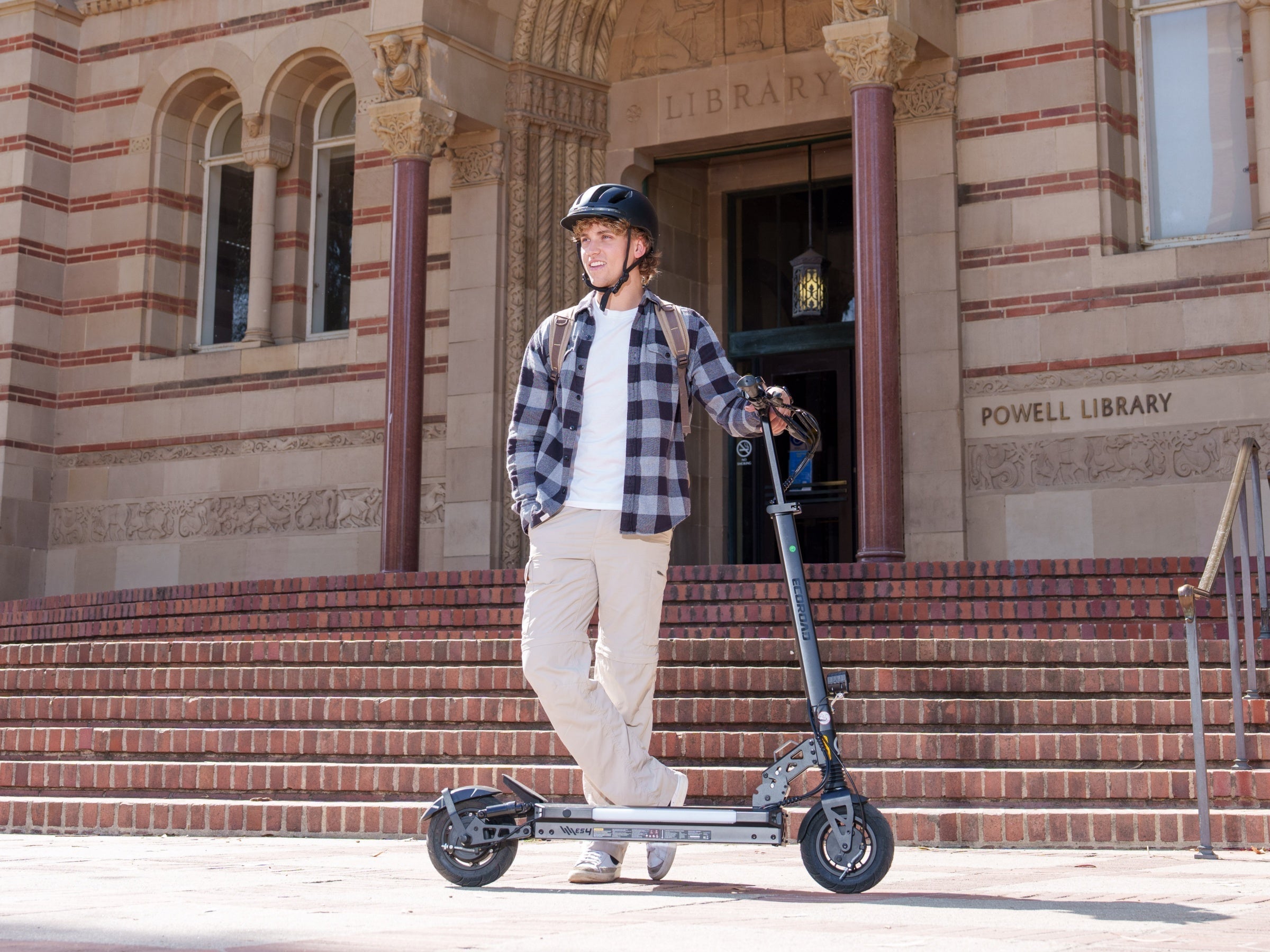
The ECOROAD ES4 Electric Scooter lists an 800W motor, 25 mph top speed, and 35-mile range, making it a stronger option for riders who want more comfort and capability.
Choose based on real riding conditions, not just a perfect-weather range number.
Keep the Scooter Maintained
Battery performance is connected to the whole scooter. Dragging brakes, low tire pressure, worn tires, loose components, or dirty moving parts can make the battery work harder.
Before regular summer rides, check tires, brakes, lights, folding latch, and battery level. If something feels off, handle it early.
Make Hot-Weather Battery Care a Routine
Electric scooter battery care in hot weather is mostly about avoiding extremes. Store the scooter out of direct sun, let it cool before charging, avoid draining it to empty, keep tires properly inflated, and ride smoothly when temperatures climb.
These habits help protect range, performance, and long-term battery health. They also make summer riding feel calmer. A well-cared-for battery is less dramatic, and frankly, that is the kind of battery everyone deserves.
What Hot-Weather Riders Usually Ask
Can hot weather damage an electric scooter battery?
Yes. Extreme heat can reduce performance and add long-term battery stress, especially if the scooter is stored or charged in direct sun.
Should I charge my scooter right after a summer ride?
It is better to let the scooter cool first, especially after a long ride, hill climb, or hot commute.
Does heat reduce electric scooter range?
It can. Range is also affected by speed, hills, rider weight, tire pressure, wind, and stop-and-go riding.
Where should I store my scooter in summer?
Store it indoors, in shade, or in a cool dry area. Avoid hot cars, direct sun, and sun-baked pavement.
What should I do if the battery feels too hot?
Stop riding, turn the scooter off, move it to shade, and let it cool naturally before charging or riding again.