


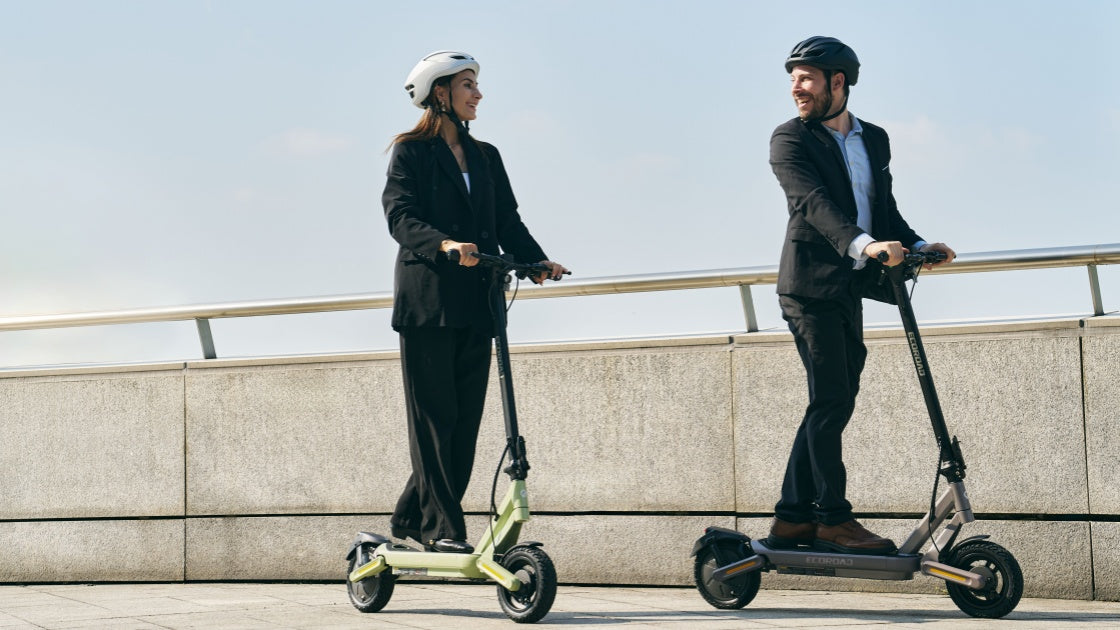
Why an E-Scooter Changes How You Experience a City
Walking tours are great until your feet give out at hour three. Driving downtown means fighting traffic and paying for parking. Public transit gets you close, but not quite there. An e-scooter fills the gap between all three. They’re fast enough to cover ground, flexible enough to stop anywhere, and simple enough that the transportation itself doesn't become the story.
Most major U.S. city attractions cluster within 10-15 miles of each other. That's the sweet spot for e-scooters.
The Best U.S. Cities for Electric Scooter Tours

Some cities that have flatter terrain, protected bike infrastructure, and attractions close enough together to make the format work are better suited to scooter touring than others.
Austin, Texas, is one of the most scooter-friendly cities in the country. Its downtown is relatively flat, bike lanes run through the most popular areas, and the concentration of things worth seeing makes it easy to build a full-day route without backtracking. For instance, the Lady Bird Lake Trail, South Congress Avenue, Zilker Park, and the street art districts.
ECOROAD's own Top 3 Florida Destinations guide demonstrates exactly how well e-scooters work for destination sightseeing when the terrain is right.
San Diego, California, offers coastal scenery and mild weather year-round. Mission Bay, Balboa Park, the Gaslamp Quarter, and the waterfront paths near San Diego Bay are all connected by smooth, well-maintained routes. The Pacific Beach boardwalk stretch in particular is one of the most enjoyable flat riding experiences in the U.S.
Portland, Oregon, has extensive protected bike lanes, low-speed streets, and a culture that genuinely accommodates scooter riders. Waterfront Park, the Eastbank Esplanade, and the Pearl District are all accessible via safe, dedicated paths. This makes Portland one of the best cycling infrastructures of any American city.
Planning Your Route: Start With the Map, Not the Itinerary
The biggest planning mistake on a scooter city tour is building a rigid schedule. Traffic, interesting detours, and the general unpredictability of city riding make fixed timetables frustrating. Instead, plan loosely around anchor points and let the route fill in naturally.
Start by identifying at least 3 to 5 must-see stops or destinations that are spaced no more than 2 to 3 miles apart. Then look for the connective tissue:
Protected bike lanes and greenways - prioritize these over main roads wherever possible.
Riverfront and waterfront paths - smooth, scenic, and naturally low-traffic
Multi-use trails - typically the most comfortable riding surface in any city
Low-speed residential streets - good alternatives when bike lanes aren't available
Avoid steep hills where you can. On a long tour, sustained climbing draws noticeably more battery current on a hilly route, which can reduce real-world range by 15-20% compared to flat riding.
For tips on how tire choice and terrain interact with battery efficiency, ECOROAD's guide on why 8.5-inch off-road tires excel in city riding is directly relevant.
Matching Your ECOROAD Model to a Full Day of Touring
Range planning is the practical backbone of any e-scooter city tour. A typical day of sightseeing with regular stops covers 10-20 miles. Here's how ECOROAD's lineup maps to that:
|
Model |
Range |
Speed |
Best For |
|
35 miles |
25 mph |
Medium tours, mixed surfaces |
|
|
42 miles |
28 mph |
All-day tours, longer routes |
|
|
50 miles |
32 mph |
Maximum range, any terrain |
Real-world range is typically 20-25% lower than rated range under city conditions — stop-and-start riding, passenger weight, and terrain all factor in. For a 15-mile tour, the EC9 covers it comfortably. For a full-day 25-mile exploration with stops, the ET6 or ET8 gives you the range buffer to ride without monitoring the battery.
If you're planning a longer route, it’s vital that you identify potential charging spots along the way. Most ECOROAD models charge fully in 6-9 hours, so a 30-minute stop won't top you up, but it's worth knowing where options are if you need them.
What to Bring on a City Scooter Tour
Keep it light. Everything you bring goes in a backpack, which is the only hands-free option that doesn't affect your balance or steering. Here's what actually matters:
Must-have:
Helmet - non-negotiable regardless of local rules
Lock - U-lock for extended stops, cable lock for quick ones
Phone mount - keeps navigation visible and hands on the bars
Water bottle - city riding in warm weather dehydrates faster than it feels
Worth adding:
Gloves - improve grip and reduce vibration fatigue over long rides
Light rain jacket - compact, stays in the bag until needed
Portable charger - for your phone, not the scooter
Small multi-tool - handles loose bolts that inevitably appear after a day of riding.
Leave anything non-essential at your accommodation. The goal is freedom of movement, and a heavy pack undermines that.
Staying Safe in Urban Traffic

City riding introduces variables that trail or suburb riding doesn't: denser pedestrian traffic, more intersections, unpredictable drivers, and surface hazards that appear quickly.
Intersections deserve the most attention. Slow down before everyone, even when you have the right of way. Make eye contact with drivers before crossing. A driver who sees you is a driver who stops for you.
Watch for the surfaces that cause most falls:
- Potholes and road cracks - common in older city neighborhoods
- Wet-painted road markings - nearly frictionless in rain
- Metal grates and manhole covers - particularly slippery when wet.
- Railroad and streetcar tracks - cross at a 90-degree angle, never at an angle
Match your speed to the environment. On a protected waterfront path with light traffic, 15-18 mph is comfortable and safe. On a busy downtown street with pedestrians and turning vehicles, 10-12 mph gives you the reaction time you actually need.
For a comprehensive look at safe urban riding habits, ECOROAD's guide on riding e-scooters legally in New York City covers both legal requirements and practical safety habits applicable to any major U.S. city.
Before You Ride: Quick Checks That Prevent Tour-Ruining Problems
This 90-second pre-ride checklist handles the issues that tend to derail city tours:
- Battery level
- Tire pressure
- Both brakes
- Folding mechanism
- Lights
The City Is Better at 15 mph
There's a version of city touring where you're rushing between landmarks, checking things off a list. And then there's the version where you're gliding down a waterfront path with nowhere specific to be for the next hour, watching the city move around you at the pace you set.
The second version is what an ECOROAD scooter makes possible. The preparation in this guide is what makes sure the day stays in that second version rather than sliding into the first.
Browse the lineup at ECOROAD'S collection to find the model that fits your range needs.
What Riders Usually Ask
How far should I plan my city scooter tour?
10-20 miles is the comfortable range for a full day of sightseeing with regular stops. The EC9 handles 15-mile days easily; for 20+ miles with hilly sections, the ET6 or ET8 gives you the range buffer to ride without concern.
Do I need a special license to ride an ECOROAD scooter in U.S. cities?
Requirements vary by state and city. Most jurisdictions require riders to be 18+, wear a helmet, and follow the same traffic rules as cyclists. Some cities restrict sidewalk riding and set speed limits in certain zones. ECOROAD's NYC legal riding guide is a useful reference for understanding how regulations typically work across U.S. cities.
Can I bring my ECOROAD scooter on public transit if I need a break?
Yes, all ECOROAD models fold quickly and compactly. Most U.S. transit systems permit folded scooters on buses and light rail during non-peak hours. Check your specific city's transit policy for any size or weight restrictions.
What's the best ECOROAD model for a first-time city tour?
For riders who want more range buffer and a bit more power on varied terrain, the EC10 ($409.99) or ET6 ($449.99) are the natural next steps.
What do I do if my battery gets low mid-tour?
Switch to ECO mode immediately to limit motor power draw and meaningfully extend remaining range. Identify the nearest charging option (coffee shop, hotel lobby, restaurant) and plan a 30-45 minute stop. If you're further from your destination than your remaining range comfortably covers, use public transit for the longest leg and ride the final miles.