


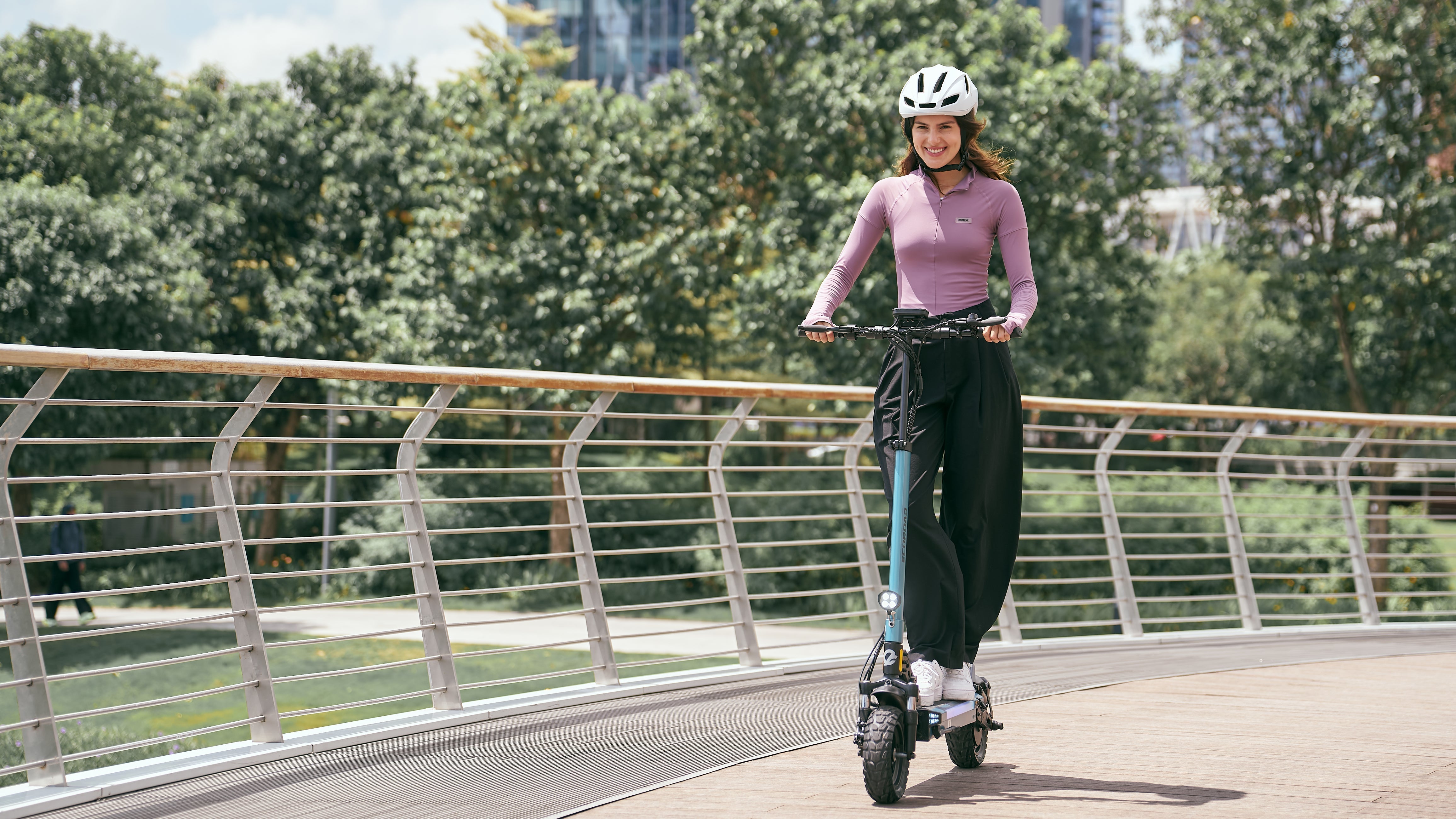
Start With the Rule That Keeps Everyone Calm
The safest way to ride an electric scooter around pedestrians is to slow down before you get close, give people plenty of space, communicate before passing, and avoid riding where scooters are not allowed. Pedestrians are slower, less protected, and more unpredictable than scooter riders, so your job is to make your movement easy for them to understand.
This matters in places like New York City, Chicago, Seattle, Los Angeles, Austin, Washington, DC, and beach towns where sidewalks, parks, bike lanes, and shared paths can fill up quickly. A scooter can feel quiet and harmless from the rider’s point of view, but to a pedestrian, a fast scooter passing close from behind can feel sudden and aggressive.
Good pedestrian safety is not complicated. Slow down earlier than you think you need to, pass wider than you think you need to, and never assume people heard you coming.
Know Where You Are Allowed to Ride

Before riding near pedestrians, check local rules. Many cities restrict or ban electric scooters on sidewalks, especially in downtown areas. Some allow scooters on shared-use paths but require slower speeds. Others treat bike lanes as the preferred place for scooters.
This is where riders need to separate convenience from permission. A sidewalk may look like the easiest route, but that does not mean it is legal or safe. If bike lanes, protected lanes, or low-speed streets are available, those are often better choices.
ECOROAD’s guide to riding e-scooters legally in New York City is useful because it shows how local laws can shape where and how riders should use an electric scooter.
Slow Down Before People, Not Beside Them
One of the biggest mistakes riders make is waiting until they are already close to pedestrians before slowing down. That leaves less room for mistakes and makes the pass feel tense.
Reduce speed early when approaching walkers, runners, families, tourists, kids, dogs, or crowded crossings. On shared paths, slow to a pace where you could stop quickly if someone steps sideways. Near schools, parks, beaches, and outdoor dining areas, ride even more cautiously.
A commuter scooter like the ECOROAD EC10 Electric Scooter, listed with a 750W motor, 25 mph top speed, and 35-mile range, has enough performance for daily routes. But around pedestrians, the best feature is not speed. It is the control.
Pass With Space and a Clear Signal
Passing pedestrians safely depends on two things: space and communication. If the path is narrow, crowded, or unclear, wait. Passing too close to save five seconds is not worth it.
Use a bell, a calm voice, or another clear warning before passing. Say something simple like “Passing on your left.” Avoid startling people with a loud shout at the last second. Give them time to react.
When passing:
-
Slow down first.
-
Announce your pass early.
-
Leave as much space as possible.
-
Avoid passing between people in a group.
-
Do not pass near blind corners or crosswalk entrances.
If someone does not move, do not force it. Slow down and wait. The path is not a video game level, although some riders seem determined to treat it like one.
Be Extra Careful Around Kids and Dogs
Children and dogs are unpredictable. A child may suddenly run across the path. A dog may stretch a leash across the lane. A parent may turn quickly to catch up with a child. These are normal pedestrian behaviors, not personal attacks on your commute.
Whenever you see kids or dogs, slow down enough that you can stop without panic. Give extra space and avoid ringing a bell too close, since it can startle both the person and the dog.
This is especially important on park paths, waterfront routes, beach areas, campuses, and neighborhood trails. In places like Central Park approaches, Santa Monica paths, Chicago lakefront areas, or downtown Austin trails, shared-space awareness matters more than top speed.
Do Not Use Sidewalks Like Bike Lanes
If sidewalk riding is allowed in your area, use very low speeds and treat pedestrians as the priority. Sidewalks are full of doorways, bus stops, signs, patios, strollers, and people stepping out of stores.
If sidewalk riding is not allowed, do not do it. Use bike lanes, shared roads, or legal routes instead. The best sidewalk riding habit is simple: if you cannot ride slowly and politely there, walk the scooter.
Watch Crosswalks and Intersections
Crosswalks are pedestrian spaces first. Slow down before crosswalks, driveways, curb cuts, and intersections. Pedestrians may enter from behind parked cars, buses, landscaping, or storefronts.
If you need to cross at a pedestrian crossing, follow local rules and slow to walking speed. In some places, riders may need to dismount. Never blast through a crosswalk because the signal is about to change.
Intersections are also where drivers may be looking for cars, not scooters. If pedestrians are nearby, your movement should be predictable to both them and drivers.
Use Brakes Smoothly
Pedestrian-heavy areas require smooth braking. Sudden braking can surprise people behind you and may cause the scooter to skid, especially on wet pavement, painted lines, or loose grit.
Before daily riding, test your brakes. ECOROAD’s article on why brakes are the most important feature on an electric scooter is a useful internal link here because pedestrian safety depends heavily on controlled stopping.
Models like the ECOROAD ES4 Electric Scooter, listed with an 800W motor, 25 mph top speed, and 35-mile range, can fit rougher city riding, but braking habits still matter more than specs near people.
Stay Visible Even During the Day

Pedestrians often rely on sound, movement, and visual cues. Scooters can be quiet, so visibility helps. Use lights in low light, wear visible clothing, and avoid riding in blind spots near parked cars, crowds, or building exits.
A front light and rear light are not only for roads. They also help walkers notice you earlier on shared paths.
Choose the Right Scooter for Shared Routes
If your rides often include parks, campuses, waterfront paths, or crowded city routes, choose a scooter that feels controllable at low speeds. High range and power are useful, but pedestrian-heavy riding needs stable handling, reliable brakes, and predictable throttle response.
The ECOROAD ES6 Electric Scooter, listed with a 1000W motor, 31 mph top speed, and 40+ mile range, is better suited for riders who need more power and range on longer routes.
More power should come with more restraint around people. That sentence is less exciting than a speed spec, but much more useful.
Maintain the Scooter So It Responds Properly
A scooter that brakes poorly, has low tire pressure, or feels loose is harder to control near pedestrians. Before regular rides, check tires, brakes, lights, folding latch, throttle response, and battery level.
Maintenance is not just about keeping the scooter alive. It is about making sure it responds when a pedestrian steps into your path.
Share Space Like People Can Surprise You
The safest scooter riders assume pedestrians may change direction without warning. That mindset keeps your speed reasonable and your hands ready near the brakes.
Avoid weaving through crowds. Avoid headphones that block surrounding sounds. Avoid passing close to older adults, children, or people with mobility aids. Give people time, room, and respect.
If a space is too crowded, step off and walk the scooter. It may feel slower, but it is often the smarter move.
Better Shared Paths Start With Better Riding
Riding an electric scooter around pedestrians safely comes down to speed, space, communication, legal route choice, and patience. Slow down early, pass with a clear warning, keep distance from kids and dogs, and use bike lanes or shared paths responsibly.
A good scooter ride should not make pedestrians feel like obstacles. When riders behave predictably, everyone gets a calmer street, path, or park. That is good for riders too, because the more responsibly scooters are used, the easier it is for cities to support them.
What Shared-Space Riders Usually Ask
Can I ride an electric scooter on the sidewalk?
It depends on local law. Many cities restrict sidewalk riding, especially downtown. If it is allowed, ride slowly and yield to pedestrians.
How fast should I ride near pedestrians?
Ride slowly enough to stop quickly if someone steps into your path. On crowded shared paths, that may mean near walking speed.
Should I use a bell when passing pedestrians?
Yes, but use it early and calmly. A voice cue like “passing on your left” also works well.
Is it safe to ride scooters in parks?
It can be, if scooters are allowed and you ride slowly around walkers, runners, kids, and dogs.
What should I do if a path is too crowded?
Slow down or walk the scooter until the area clears. Forcing your way through a crowd is unsafe and poor riding etiquette.