


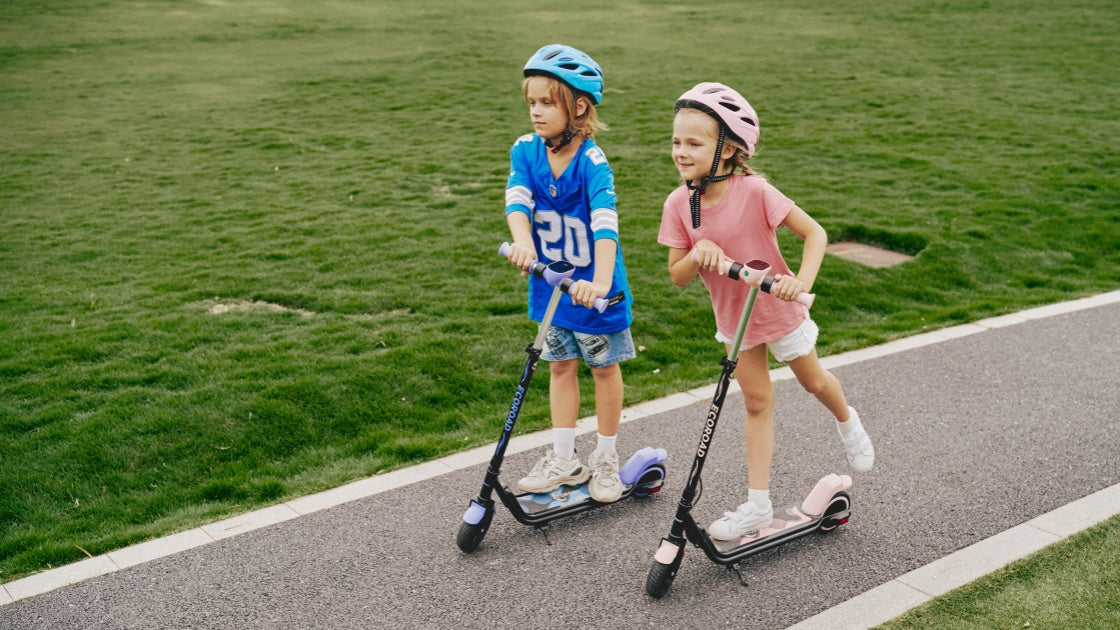
Keep the Scooter Fun by Keeping It Checked
Kids electric scooter maintenance is mostly about small, regular checks: test the brakes, inspect the tires, check the battery, make sure the lights work, look for loose parts, and confirm the scooter feels stable before every ride. Parents do not need to be mechanics, but they should know what “normal” looks and feels like.
That matters whether a child rides around the neighborhood, to a nearby park, along a quiet driveway, or on a smooth path near places like a school campus, local playground, or family-friendly trail. Kids tend to focus on the fun part. Parents get the less glamorous but very important job of checking that the scooter is ready.
ECOROAD’s kids electric scooter collection includes models designed for younger riders, including the EK6 and EK8. Even with kid-focused designs, routine checks help make every ride safer and smoother.
Start With the Right Scooter for the Child
Maintenance is easier when the scooter fits the rider. A scooter that is too fast, too heavy, or too tall can make riding harder to control.
The ECOROAD EK6 Electric Scooter is listed with a 150W motor, 10 mph max speed, up to 7 miles of range, 6.5-inch solid tires, electric brake, rear foot brake, IPX4 waterproof rating, 15.4 lb net weight, and recommended rider age of 6+. Those specs make it easier for parents to understand what to check: brakes, tires, lights, battery, deck grip, and height fit.
The ECOROAD EK8 Electric Scooter is listed with a 200W motor, 10 mph max speed, up to 9 miles of range, 6.5-inch solid tires, 21.6 lb net weight, IPX4 waterproof rating, and recommended rider age of 6+. It also includes Bluetooth music, which is fun, but parents should still keep attention on the basics: stopping, steering, and visibility.
Daily Check

Test the Brakes First
Before a child rides, have them roll slowly and stop. The scooter should slow down smoothly without strange sounds, delay, or wobbling. If the scooter has more than one braking method, check both.
The EK6 includes an electric brake and rear foot brake, which gives parents a simple way to teach safe stopping. Children should practice braking before riding near others. The goal is not a dramatic stop. It is a calm, controlled stop.
ECOROAD’s article on why brakes are the most important feature on an electric scooter is useful for parents because braking is the main safety habit kids need to build early.
Look at the Tires
Kids may ride over small stones, sidewalk cracks, leaves, puddles, and rough pavement without noticing. Parents should look at the tires before each ride.
The EK6 and EK8 both list 6.5-inch solid tires. Solid tires reduce the worry of flats, but they still need inspection. Look for cracks, flat spots, embedded debris, uneven wear, or anything that changes how the scooter rolls.
If the scooter starts vibrating more than usual or pulling to one side, stop the ride and check the tires. Tire condition affects braking and balance. That quiet little wheel wobble is not a personality trait; it is usually a sign to inspect something.
ECOROAD’s guide on light off-road tire scooters in city riding is written for broader scooter riding, but it helps explain why tires affect comfort and control.
Battery and Charging
Check the battery before a ride, especially if the child is going farther than the driveway or nearby sidewalk. The EK6 lists up to 7 miles of range and a 2-3 hour charging time. The EK8 lists up to 9 miles of range and a 5-6 hour charging time.
Parents should avoid letting the battery sit fully drained for long periods. Use the correct charger, charge indoors in a dry space, and keep the charging port clean. After riding through damp conditions, let the scooter dry before charging.
Do not plan rides down to the last bit of battery. Kids are not famous for graceful logistical forecasting. Build in a buffer.
Lights, Deck, and Handlebar Feel
Kids’ scooters often include lights for fun and visibility. Make sure they work before low-light rides. Also check the deck surface. It should be clean and grippy, not slick with mud, water, leaves, or sand.
The handlebars should feel straight and secure. If the scooter has adjustable height, confirm it is locked properly before each ride. A loose handlebar or slipping height adjustment can make a child feel unstable quickly.
The child should be able to stand comfortably, keep both hands on the bars, and look ahead without hunching.
Weekly Check
Tighten and Inspect the Scooter
Once a week, parents should inspect the scooter more carefully. Look at the stem, deck, wheels, brake area, screws, folding or adjustment parts, and any visible cables. Nothing should rattle, scrape, rub, or move in a new way.
This check is especially important if the scooter is used daily or shared between siblings. Shared scooters live a dramatic little life. One child rides gently, another treats every driveway seam like a stunt ramp. The scooter remembers.
If anything looks bent, cracked, loose, or damaged, pause riding until it is fixed.
Clean It Without Soaking It
Wipe the scooter with a dry or lightly damp cloth. Focus on the deck, wheels, lights, brake area, and charging port cover. Avoid high-pressure water or soaking the scooter.
Both EK6 and EK8 list IPX4 waterproof ratings, which means they can handle splashes, but that does not mean they should be sprayed down or ridden through deep puddles. Water and electronics are not best friends. They are polite acquaintances at most.
If the scooter is used around dusty sidewalks, park paths, or wet pavement, cleaning once a week helps parents spot wear earlier.
Teach Kids the Maintenance Routine

Kids do not need to repair the scooter, but they can learn the safety routine. Before riding, teach them to ask:
- Is the battery charged?
- Do the brakes work?
- Are the tires rolling normally?
- Are the lights working?
- Is my helmet on?
- Is this a safe place to ride?
That small habit builds responsibility. It also helps children notice when something feels wrong. If a child says the scooter sounds different, shakes more, or does not stop the same way, take it seriously.
Choose Safe Riding Areas
Maintenance helps, but the riding environment matters too. Kids should ride in smooth, open, low-traffic spaces where parents can supervise. Avoid busy streets, crowded sidewalks, steep hills, loose gravel, wet leaves, and areas with cars backing out of driveways.
Good beginner spaces include quiet neighborhood paths, empty school parking lots after hours where allowed, smooth park paths, or large driveways. Always follow local rules for electric scooters, helmets, and where children are allowed to ride.
Store the Scooter Properly
Store the scooter indoors when possible. Keep it dry, away from extreme heat, and out of rain. If it is left in a garage, make sure the battery is not sitting empty for weeks.
ECOROAD’s article on foldable electric scooter design is focused on portability, but the same idea applies to kids’ scooters: easier storage usually means better daily care.
A regular storage spot also helps parents remember to charge and check the scooter.
Make Safety the Normal Routine
Kids' electric scooter maintenance does not need to feel complicated. A quick brake, tire, battery, light, and handlebar check before riding can prevent most avoidable problems. A weekly wipe-down and inspection helps parents catch wear before it becomes serious.
The best maintenance routine is the one that becomes automatic. Check the scooter, choose a safe place to ride, use a helmet, and keep rides supervised. The scooter stays fun, and parents get fewer “something feels weird” surprises halfway down the sidewalk.
What Parents Usually Ask
What should parents check before a child rides an electric scooter?
Check the brakes, tires, battery, lights, handlebars, deck grip, and any adjustable parts. Also make sure the child is wearing a helmet.
How often should I maintain a kids electric scooter?
Do a quick safety check before every ride and a more detailed inspection once a week if the scooter is used regularly.
Are solid tires maintenance-free?
No. Solid tires do not need air, but parents should still check for cracks, wear, debris, and flat spots.
Can kids ride electric scooters in the rain?
Avoid wet rides when possible. IPX4-rated scooters can handle splashes, but wet surfaces reduce traction and water can still affect parts over time.
When should I stop my child from riding the scooter?
Stop riding if the brakes feel weak, the scooter wobbles, the handlebars feel loose, the battery acts strangely, or any part looks cracked or damaged.