


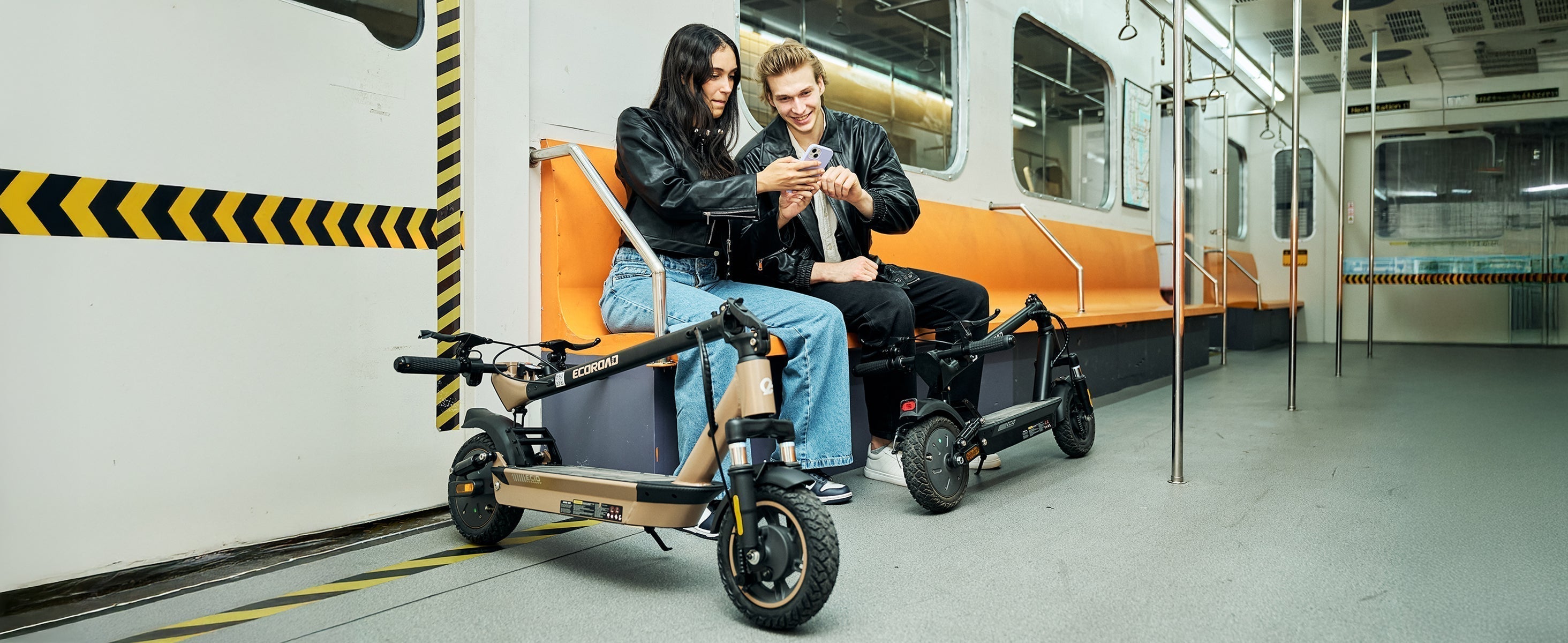
The Easiest Way to Run Errands You've Never Tried
Running errands on an electric scooter is genuinely one of the best use cases for the vehicle. It’s convenient for short distances, frequent stops, no parking stress, and zero fuel cost. The trick is planning the route so the scooter works for you rather than adding a new layer of logistics. Done right, a morning errand run on an ECOROAD scooter covers the pharmacy, the grocery stop, and the post office faster than it would take to find parking near any one of them.
Start With a Trip Map, Not a To-Do List
Most people think about errands as a list. The better approach is to think about them as a map. Before you leave, pull up your neighborhood on Google Maps and drop a pin on every stop. Look for a natural loop, like a route that starts at home, connects each stop in geographic order, and returns without backtracking.
Two things make this more effective on a scooter than in a car. First, you can take routes a car can't. This includes bike lanes, cut-throughs, and paths between parking lots that shave real time off urban routes. Second, you're not paying for or hunting for parking at each stop, which removes the variable that most often turns a simple errand run into a 45-minute ordeal.
If your stops are spread across more than about 8 miles total, check your battery level before leaving. ECOROAD's lineup handles different distance needs:
ES4 - 30-mile range, 25 mph. Ideal for neighborhood errand loops under 6 miles
EC10 - 35-mile range, 25 mph. Comfortable for longer multi-stop runs across multiple neighborhoods
ET6 - 42-mile range, 28 mph. The best buffer for full-day multi-errand trips with room to spare
Batch Your Stops the Smart Way

The most efficient errand routes follow one principle: cluster stops by location, not by priority. The pharmacy being "most important" doesn't mean it should be your first stop if it's on the opposite side of your route from everything else.
Order stops geographically — hit the furthest point from home first, then work your way back. This means you're always heading toward home as the day goes on, so if you run low on battery or time, you're already heading the right direction. It also means your heaviest stop (usually groceries) comes last, so you're not carrying weight for the entire route.
Errand Day Packing Checklist
Carrying gear on an e-scooter for errands is simpler than most people expect. A backpack is the only real requirement:
Backpack (20-25L) - keeps weight centered and hands free; essential for balance.
Reusable shopping bags - fold flat and weigh nothing; handle most grocery and retail stops
Lock - U-lock for stops over 10 minutes, cable lock for quick ones
Phone mount - keeps navigation visible without stopping.
Small insulated bag - for any cold or temperature-sensitive items on the return leg
Helmet - non-negotiable regardless of how short the individual hops feel.
For grocery stops specifically, keep heavier items low in the backpack and centered on your back. Weight distributed properly doesn't affect scooter handling. Weight hanging off one shoulder or from the handlebars does.
Navigating Urban Streets Safely Between Stops
City errand riding has its own rhythm. It’s commonly mixed with short hops, frequent starts and stops, and more pedestrian and vehicle interaction than a long commute. A few adjustments make it smoother.
Use bike lanes wherever available.
In most U.S. cities, e-scooters are permitted in bike lanes — not on sidewalks. ECOROAD's guide on riding e-scooters legally in New York City is a useful reference for understanding how urban e-scooter rules work in practice, even outside NYC.
Slow down before every intersection.
Urban errand routes cross a lot of intersections, often in neighborhoods with mixed pedestrian traffic. Make eye contact with drivers before crossing. Don't assume right of way is the same as confirmed safety.
Lock your scooter at fixed structures.
Lock through the frame, not just the wheel, and attach to something genuinely fixed, like a bike rack, a post, a railing. ECOROAD models with app connectivity let you enable remote lock as a secondary security layer.
Battery Management on Multi-Stop Runs

Battery use on errand runs differs from commuting because of all the stop-and-start acceleration. Frequent full-stop launches draw more current than steady cruising. On a 10-mile errand loop with eight stops, you'll use the battery faster per mile than on a straight 10-mile commute.
Practical adjustments:
-
Use ECO mode between stops — it limits power draw and extends range without meaningfully slowing you down on short hops.
-
Check battery level before your last major stop, so you know you have enough to get home.
-
On longer errand days, plan one stop near a café or location where you can plug in for 30 minutes if needed.
ECOROAD's article on why 8.5-inch off-road tires excel in city riding is worth reading for understanding how tire choice affects range efficiency in urban start-stop riding — relevant for errand route planning on varied city surfaces.
Errands Are Where E-Scooters Actually Shine
Long-distance commuting gets most of the attention in e-scooter coverage, but errands might be where the value is clearest. No parking. No traffic. No fuel. Door-to-destination on a route you choose. A 6-mile errand loop that would take 35 minutes by car, counting parking at each stop, takes about 25 minutes on an ES6 and costs virtually nothing to run.
Browse the full ECOROAD lineup to find the model that fits your neighborhood range and cargo needs.
What Riders Want to Know
How far can I realistically go on one charge for errands?
Most ECOROAD models cover 25-42 miles per charge, which handles the vast majority of urban errand loops comfortably on a single charge.
Can I carry groceries on an electric scooter?
Yes. A 20-25L backpack handles most grocery runs; keep heavier items low and centered for the best balance while riding.
Are e-scooters allowed in bike lanes for errand riding?
In most U.S. cities, yes. E-scooters are permitted in designated bike lanes; rules vary by city, so check local regulations before riding.
How do I lock my scooter safely during errand stops?
Use a U-lock through the frame attached to a fixed structure like a bike rack; ECOROAD's app-connected models also offer remote lock as an additional layer.
Is ECO mode worth using on short errand hops?
Yes. ECO mode reduces power draw on frequent stop-and-start riding, which extends battery life meaningfully across a multi-stop errand run.